Tuesday, January 1, 2013

On our .6% definition of "wealthy"

I've long thought the dividing line within the US for "rich" and "middle class" was a little insane.  The concept that only 2% of a population - the approximate percentage of people in the US making $250,000 or more a year, which has previously been the standard in public discussions - means that the "middle" in "middle class" tops out at 98% of the population.

By definition the "middle class" is the class that exists between "rich" and "poor."  In 2011, there were 46.2 million people living in poverty in the US. This is approximately 15% of the population. If the US treated classes as a bell curve, one would assume something close to 46.2 million people, or another 15%, would also be rich.  That would give a total population of 92.4 million on the extremes, and a middle class of approximately 208 million people, or 70% of the population.

A pretty standard bell curve, even if the extremes are quite low.

But if we assume "rich" is someone who earns $250,000 / year, that limits the "rich" category to 2.85 million, or 2% of the population.  Suddenly, there's no bell curve.  Just a curve on one end and a little tiny dip on the other.

Now, Congress has decided that "rich" is even smaller.  Only .6% of the population, or 965,000 households, will be "rich" enough to justify an increased tax level.  The news - and as a consequence my facebook feed - is touting this as a victory for the US. The NYT has a headline proclaiming: "Senate Passes Legislation to Allow Taxes on Affluent to Rise."  It's accompanied by this picture of Joe Biden,  which a friend captioned as "Biden for Vice-President or Biden for Messiah?"

Photo by Alex Brandon/Associated Press

But how can we possibly have a "middle class" that is, essentially, everyone in the country who isn't poor?  Because when less than a million people in our country are "rich," - and the country has 300 million people in total - you're essentially saying everyone is middle class unless they're poor.

By definition, this doesn't make sense.  But as a policy choice, it could have devastating consequences.

Classes exists not out of some absolute, static reality but out of relativity to others. This doesn't mean that they don't have some objective basis, but rather that once a minimum threshold is met, there is a relative scale to wealth and poverty. Those who are "rich" or "wealthy" have an "abundance" in comparison to the rest. Someone is poor because they are lacking in wealth or have little of it.  It's not that they have an abundance or a little amount in absolute or global terms.  It's that in relation to others, they have an abundance or little.

Someone in a country where 98% of the population lives on less than $300 / month could be rich by making $500 / month. In a country where 98% of the population makes $750 / month, someone making $500 / a month is poor.  That is how class systems work; it's relative to the others in a society.

As I said, we do have some objective definitions of poverty. There is an "absolute poverty line," that is global in reach and is currently established by the World Bank as those people who live on $1.25 USD (purchase power parity) a day. But there are few people in the US to whom this would apply.

The US Census Bureau instead uses a complex set of "family thresholds" to determine poverty, which engages both an objective and a relative notion of poverty. At the heart of our understanding is apparently the "economy food plan," which is "the least costly of four nutritionally adequate food plans designed by the Department of Agriculture."  Since a survey in the 1950s found "that families of three or more people spent approximately one-third of their after-tax money income on food," the poverty line was placed at three times the cost of meeting the economy food plan for a family of 3.  It was then adjusted for other types of families. This gives us an objective basis (poverty is the ability of a family to eat healthily) while also a relative scale (to not be poor you need to make 3x this amount because the average family uses 1/3 of their income on food).

Because poverty is not an absolute phenomenon - at least not principally in the US - there's no need for our society to accept that 15% of the population is poor.  We have some power to control how much of our society is poor and rich by developing standards that fight poverty so that our bell curve is, well, curvier.  We could easily justify .6% of the population as rich if we also have a poverty rate of .6% of the population.  This suggests a society that is in balance, and to an extent, fair.*

But why are we as a society so willing to accept poverty while so determined to limit the concept of wealth just so a small percentage of our population can enjoy a better tax bracket?  We limit wealth so that the tax burden is limited under an idea that all those people - the people currently between the top 2% and the top .6% of our population - are "just regular, middle class folks" while never taking the concrete steps necessary to reduce the 15% poverty rate to just .6% of our population so that those people - the poor - can truly become "just regular, middle class folks."  (And the solution can't simply be that we lower the poverty line to .6% if we don't reduce the factual reality of poverty.)

I am regularly told by my conservative friends that we need to cut spending to fight the deficit and that this is the best answer as it limits the "theft" that occurs when the government "takes from the middle class to give to the poor." This philosophy, though, intentionally protects the "haves" while increasing the burden on the "have nots" by creating an understanding of "rich" and "poor" that accepts poor while not recognizing rich.

In doing so, we create a false perception that "we're all in this together," and by "we" we mean those who aren't poor. The poor, though, aren't in this with us. They are the "lazy," "stupid," "47%" "takers." We demonize them rather than recognize that poverty exists only because it is in relative relation to the rest of us  - meaning relative to both the middle class and the rich. By failing to recognize a "wealthy class," we create a belief that our "poor class" exists by choice rather than as a factual reality of its relationship to the rest of us.

This belief in their "choice" - rather than their relative existence - means we're less likely to undertake the steps necessary to reduce that poor class as a percentage of our population.

It is that failure to recognize the relativity of poverty - and of wealth - that leads to so much insanity in our society. In perhaps one of the craziest reaches of our society's tendency to govern by "truthiness," CNN notes that "some people who make a lot of money don't feel rich. After all, the cost of living say in New York eats up a lot more money than it does in Boise."

First, why can't we take account of the difference in cost of living when drafting tax legislation?  Why can't we say, for instance, determine the city that has the median standard of living and adjust the percentage out from there to take account of the differences across the US?  This may mean that someone in Des Moines, Iowa who makes $230,000 / year pays a higher rate than someone in NYC because we recognize that wealth and poverty are, in fact, relative and not absolute concepts?

Second, regardless of whether one feels rich - because, afterall, many who are statistically rich live well beyond their means and may as a result be living paycheck to paycheck - there is an objective reality to it.  We can't continue to govern our policy based on whether something feels rights; we have to start governing based on whether something is right.

Cutting spending, the "solution" I keep hearing from conservatives, can only ever be one part of a solution to our deficit, but it's unfortunately the part that will most grievously harm the 15% of the population we recognize as being poor.  If we really want to solve our problems, we need to have a better, clearer vision of what "rich" and "poor" are; they are the relatives in our scale of our reality.

But by being relative, there is likely to be some symmetry between their existence. We need to ensure that the expectation is symmetry is reflected in our policy choices.

I have a background and degrees that means that a significant percentage of my friends would classify as "rich" under the 2% scale. Very few will classify as "rich" under the new standard, and many more would classify as "rich" if we adopted a 15% of the population classification.  So I understand that several will be outraged at what I suggest. To those friends, I want to say congratulations. You are part of the solution to our country's woes.  It also happens that you're already rich,** even if you don't feel it.


* I do recognize the existence of the "Pareto efficiency," which finds that 80% of a population's wealth will generally be held in the hands of 20% of the population. 

**Unless, of course, you live in NYC, in which case whether you're rich or not is up for debate.

Call to Congress: the Need for More Research on Gun Control

As I've posted statistics and links to research on gun violence, a few people keep asking me why there isn't more information on specific indicators and variances between things like socioeconomic status, etc. 
The answer is now clear for me: the gun lobby has had Congress and state legislatures pass legislation that prevents research into the impact of gun ownership and possession on issues of crime, injury and death.

A small minor correction, really: the research can be funded only if it won't lead to advocating for gun regulations. So if your research will show that greater gun ownership is good for health, then you can be funded. If it shows that we need gun regulation, such research endangers the funding of entire institutions.

This strangling effect on our research prevents a more thorough and honest discussion about our available policy choices. 
Why? Perhaps because so far the evidence is conclusive: more guns equals more homicides
It's time for Congress to free up our researchers and allow for clearer policy discussions.

Tuesday, December 18, 2012

On trust and guns

I don't stop for people stranded on the road.  I mean, I have at times when I've prayed immediately before and it feels right in my gut.  But that's rare.  Usually I don't even pray about my decision, I just keep on driving.  It's not because I'm an unkind person.  And it's not because I can't relate to their situation. I was once stranded on the side of a busy road close to a steep (though not very long, thankfully) cliff.  My lights didn't work because the problem with the car was that the threads in my battery had been shredded so when I hit a bump, the entire battery stopped. I barely had enough time to get the car off the road and onto the precarious shoulder where I sat, waiting first for a friend to come and sit behind me with her flashers on and then for the tow truck, who first had to pull another car from the river that sat below me.

So I sympathize with people who are stranded.  But I still don't pull over for them.  I will, however, call the police or the Highway Patrol to tell them a car is stranded and they should go help.

I also don't accept candy or rides from strangers.  Admittedly, when I was 6 years old, it was my brother who stopped me from going too close to a car of strangers who offered candy in exchange for directions.  (Because when you're legitimately lost, the people you're most likely to ask for directions are an eight year old and three six year olds...)  After that, I very diligently stayed away from strangers in cars with candy.  When offered it, I was to call my parents and the police. (It's admittedly been a long time since that's happened).

As a child, I was not to let anyone - not even teachers, ministers, or doctors - touch my no-no places without my mother knowing. If they had ever told me not to tell, that's when I was supposed to scream the loudest. This is admittedly not the rule anymore in my 30s, but if I'm at a bar and put my drink down and walk away - even for just a few seconds - I never pick it up again. Hell, I've been known to be a complete pain to sweet-talking guys because if you seem too smooth, I'm also going to distrust you.  And I always lock my doors.

Why?  Because as an American, we're taught not to trust strangers. Too many people were killed when they were nicely helping strangers stranded on the road; too many children kidnapped with the promise of candy; and too many girls raped with roofies. Our news brings us regular stories of too-trusting individuals who are betrayed. Hollywood turns these stories into made-for-TV grist (or Pretty in Pink if we're talking about too-smooth guys).

We are a society that recognizes that you both earn trust and you give trust responsibly. Our children know "fool me once, shame on you; fool me twice; shame on me." (Or as President G.W. Bush said, "Fool me once, shame on... shame on you? If you fool me, you can't fool me again.")

So why is it that I'm supposed to blindly trust every American out there with a a semi-automatic weapon? Why is it that I'm supposed to just trust you to not kill my friends' children or my nephews and niece with weapons that have fewer licensing regulations than any of the 6 cars my immediate family owns?

That's ultimately what my gun-friendly friends on facebook keep telling me:  we don't need fewer guns, we need more of them; we should arm our teachers and our principals so these people we already don't pay enough for the jobs they do have can also be the people who we now trust to responsibly keep a semi-automatic weapon within 5 feet of our curious and industrious children and teenagers.

I'm supposed to just trust every guy who doesn't have a felony conviction, or a drug conviction in the last year, with a semi-automatic weapon. I have to hope they bought their weapon from a federally licensed dealer who did the mandatory background check and 3 day waiting period.

That's the reality of our gun regulations. I keep hearing about how tough US gun laws are and how they don't keep guns off the streets - just out of the hands of law-abiding citizens. Of the (at least) 62 gun-related mass murders since 1982 - mass murders being defined as 4 or more people killed in one incident - 49 of those used guns that were legally purchased.  3/4 of the 142 guns these killers had were legally obtained.

And if it feels like these shootings are occurring more frequently, that's because they does. Of those 62 mass shootings, 7 have happened this year alone. One a month from April through December except for June, October and November, 11 since 2010, and 25 since 2006.  This is by far the deadliest year with 7 shootings and 156 injured or killed.  1999 had five shootings, with 91 injured or killed, and then 2009, 2007 and 1993 had four shootings each (73, 86, and 57 injured or killed, respectively).

Yet somehow, I'm supposed to believe that all of this indicates we should have more people carrying weapons in more places. If more guns and looser regulations about where you can carry them are supposed to ensure greater safety, this should've been our safest year yet.  In the past decade, the number of states with concealed carry laws went from 29 to 49.  Only Illinois is not a concealed carry state, and their law was just struck down as unconstitutional by a federal appellate court.

Even in the wake of the Sandy Hook shooting, my home state's asshole Governor wants to make it easier for people to take weapons into areas where our state employees work, They have to trust every person who comes in with such a weapon to be a good guy. His justification?  It's not an issue of access to guns; it's a complicated issue of culture and mental health. His proof?  Apparently it's his gut instinct because he offers nothing else.

Assuming the Governor's gut instinct about the problem is correct, then let's fix those things first and then we can talk about loosening regulations. Don't regulate our society based on your gut instincts while doing nothing to fix any of the issues your gut tells you are the problems.

The fact that 2012 - with all its lax gun laws - wasn't safer shouldn't surprise those who research in this area. Those who more than their gut instinct to determine facts and truthiness say that access to guns is the problem.

Peer reviewed studies that control for poverty levels indicate more gun ownership results in a higher level of homicides or suicides.  This is true across federal states and across countries.  And no, Israel and Switzerland are not exceptions to the rule.

Yet, gun enthusiasts keep telling me I should trust them with these weapons. I should trust them and their gut belief that they would've been able to effectively use their weapon to stop the bad guys.  I'm supposed to trust them and their understanding of the situation rather than the statistical data that tell us a serious, long-term solution to this issue exists.  It involves controlling what types of guns can be sold, to whom, and under what conditions.

I was told not to use the words "gun control" because they evoke emotional responses.  I was told we already have gun control - with "tons" of regulations on gun ownership.  So let me explain our "gun regulations" that we have tons of.  Since I'm not an expert, I'm relying on these guys who are (again, academic research, not just some guy on the internet who says he's an expert because he likes shooting things).

According to them, many people who have been convicted of crimes that are still allowed to possess firearms under current laws. "Data from two studies of individuals who have committed the most serious crimes indicate that prior to committing these crimes, the perpetrators were not prohibited from possessing a firearm under federal law."

The prohibition on drug abusers owning weapons is limited only to persons with "a conviction for use or possession of a controlled substance within the past year; multiple arrests for such offenses within the past 5 years, if the most recent arrest occurred within the past year; or … [is] found through a drug test to use a controlled substance unlawfully, provided the test was administered within the past year." So you just need to wait a year after every drug conviction and you can get a gun. And then hope you don't get arrested again for a year because it apparently doesn't matter how many times you actually get convicted for drug abuse, as long as you're not arrested in the past year you're totally fine to own a gun. 


Oh, and that prohibition on drug abusers having access to semi-automatic assault rifles? It only affects people addicted to illegal drugs. Alcoholics - no matter how abusive or dangerous - are not prohibited from owning firearms. So if you like shooting shit up, alcohol should be your drug of choice. Go ahead - have 20 drunk driving convictions. That's totally fine!  Go ahead, get in a few barroom brawls. It's with a legal drug!  We're happy to give you a gun.

That 3-day waiting period all my gun-enthusiast friends hate?  You don't need if it you buy your gun from a guy on the street.  Private sales aren't required to have a 3-day waiting period.  They aren't required to register the sale.  And there's no need for that pesky little background check thing that would tell the seller that you're actually a convicted felon from another state who has killed 8 people.  If someone privately sells a weapon to someone with a felony record who then goes out and commits more felonies, the first person is immune from suit.  40% of firearms sales occur from private sales.  So 40% of our purchasers never undergo a background check.

If you are a licensed dealer and you have shady practices?  The ATF can't access data relating to gun trace evidence and use that in their licensing procedures.  So go ahead - screw that 3 day waiting period! You'll probably still get your next licensing.

That's the state of our gun control.  That's what I'm supposed to trust to weed out the bad guys who would harm our children.  That's the policy that protects my nephews and nieces from the next Adam Lanza walking into their school.

As for those for whom 'gun control' elicits an emotional response that makes you automatically defensive, let me say this clearly: if you are more emotionally attached to your gun than you are to those 26 people in Connecticut, then you really shouldn't be allowed to own a weapon.  Any weapon including scissors or really sharp nail files.  Those 26 people were real, living beings with dreams that were snatch and families that will mourn.  Your gun is a piece of scrap metal that was nicely crafted.  It has no emotions, no dreams, and it really doesn't given a damn about you.  If you can't see that difference, you really don't deserve sharp objects.

That brings me to my final point.  Under current regulations and the stated idea of the 2nd Amendment that so many people have, I'm supposed to trust people not because they have proven themselves, but because they happened to be born on American soil.  I'm supposed to trust people with unencumbered access to semi-automatic weapons because they were lucky their grandparents or great-grandparents immigrated to the US. 


The map in our living room tells me that in the past 3 months, people from over 16 countries have come to my home.  Some of those stickers represent friends I would trust with a semi-automatic assault weapon; some I wouldn't.  Most I would trust a lot more with a semi-automatic assault weapon more than I trust most of the Americans I know with such a weapon.  Why? Because as human rights activists, they have shown a great deal of respect for human dignity and for the sanctity of life.  Many Americans don't.  That's not because they're Americans; it's because they're humans.

We don't trust people simply because they have the same passport as we do.  If we did, I'd get into cars with strangers who have candy upon proof of a birth certificate.  I'd leave my drink unattended in any bar in Euclid, Ohio (because I've never met a foreigner there who wasn't traveling with me). I'd leave my doors unlocked and stop for every stranded car on I-71.  And my parents would've been perfectly happy leaving me unattended with doctors and teachers who wanted to touch my no-no areas.

We don't do that because simply being American doesn't mean you're trustworthy with the things most precious to us: our bodies, our children, and our lives.  That shouldn't change simply because you like shooting things.

http://on.wsj.com/Zd3fqb

Wednesday, November 28, 2012

Trains and firecrackers

Last night, a young guy gets on the train with his earphones in and starts rapping loudly. No one could have conversations and people couldn't do work and it was all very frustrating and annoying. I understood people's frustration and annoyance but what I didn't understand was their response to that. Others on the train were grumbling and then two guys start talking about knocking him onto the platform and "showing him what's what." At which point I stood up, walked over to the guy, touched him on the shoulder, motioned for him to take his earphones out and said quietly, "I don't know if you know this, but everyone can hear you." He apologized and stopped.

It wasn't hard, and yet several people said things as I sat back down suggesting I'd been brave. I wasn't. I was showing him respect and expecting it in return. I almost whispered because the purpose wasn't to embarrass him but to call to his attention that he was being disruptive and annoying for other customers with an expectation he would understand that means he should stop and that the train was perhaps not the most appropriate place for loudly rapping songs with the f- and n- words. I don't think he was intending to be rude. I think his music was on so loudly (I could hear it even though I was the furthest seat away from him in my direction) that he didn't even realize that when he was rapping to himself  it was actually loud enough for the entire carriage to hear him.

This is about the fourth or fifth time something like this has happened to me on a train and I don't understand it. People are being rude - usually unintentionally so - and instead of just pointing it out or taking control of the situation in a respectful manner, everyone grumbles to themselves until they've worked themselves up into a frenzy and then feel the need to yell or punch someone.

One time, it was a group of children returning home in their school uniforms. About 20 of them entered a half-full carriage, stood in the aisles, and made a bunch of noise, sometimes bumping into other people, sometimes shouting down the carriage to talk to someone else. I kept listening to grown-up adults - sometimes in their mid-40s or -50s grumbling about the state of the world and these kids and all their noise, and why don't they just sit down, and blah blah blah.  Finally, almost as annoyed with the "adults" on the train as I was with the kids, I stood up and said, "Okay, I think it's time now for everyone to sit down.  Go find seats, take a friend or two with you, but you cannot continue to stand right here and act like this. It is a train, not a playground."  All the students but 5 sat down. Four stood around their group's ringleader while he grumbled about how "she can't make me do nothing."  That's fine.  Again, I wasn't trying to make a show of it or tell him I could, in fact, make him do nothing or something or whatever that double negative is supposed to be indicating to me.  I was only pointing out that their behavior was inappropriate based on social standards, expectations, and its impact on those around them. I didn't need them all to sit, but I needed enough of them to sit that the rest of us could hear ourselves think. Two of the students sat down across from me and we had a perfectly pleasant chat about their favorite classes and what they want to be when they grow up. 

Another time, three boys were in the back of a carriage jumping around and three times fell into the woman closest to them. They never apologized and she didn't ask them to stop but clearly got more annoyed and upset and kept grumbling but never to them.  So I told them to stop.  I said they owed her an apology and that they should sit down.  They looked mortified and did both things I suggested.

I raised the question this morning with some of my colleagues and students and every single person expressed shock at my reaction to the guy on the train last night. A couple joked and said "And you're still alive?" and some said it was a cultural difference that would lead me to do this.  But I just don't understand why it's so difficult for people in the UK to speak up when something socially inappropriate is happening, particularly on trains. Instead, they wait until some stroppy footballer decides to beat a kid up, or they'll call the police, or somehow completely overreact to a situation that just needs a little "hey, do you understand you're being rude?" Particularly with children and young adults - they're still figuring themselves out. Most want a little boundary to show that society believes in them to be respectful and appropriate members.

Most people aren't trying to be arses, they're just (somewhat naturally) self-absorbed and don't realize the impact they have on others; and if no one ever tells them, they never will. When I was a child - which is *not* that long ago - if I was doing something socially inappropriate, any one in my neighbourhood would've felt entitled to tell me so and then report me to my parents. It was, admittedly, really freaking annoying. But it made me more aware of the social impact of my actions. And if I was in public outside of my neighbourhood, people still would've felt entitled to tell me to stop walking in the middle of the street, to stop jumping and running into people, and to stop rapping in a closed space when it is distracting and rude to the others in that closed space.

People keep talking about how parents take no responsibility anymore, but that same thing is true for the larger community. The community needs to re-establish itself as a part of the governance structure for youths. We need to take greater responsibility for reminding them when their behaviour is rude or inappropriate, and as long as we do so in a respectful manner - rather than one that is rude and inappropriate in itself - then I think we're more likely to get the type of response that I got today.

I realize that in my hometown, this standard of "correcting" younger people is no longer really viable. Some of that, I think, is probably linked to a racist fear that the young black people in my community are somehow more dangerous and more disrespectful than their white counterparts a generation ago were. The community dynamics have changed over the past 20 years, but that doesn't mean the community responsibility has. And nothing about my interaction with the younger people there has ever suggested that they are really that different from what we were: most will respond appropriately; some will be aggressive.

My parents generally cringe when I tell this story - partly because I think they're shocked I'm still alive - but when I was about 22 to 24, there was a group of about 20 young black men hanging out outside a house across the street when I came home one day.  The family in that house had moved in after I left for college, so I didn't really know the kids and only knew the parents in passing. As I was getting  out of my car, something caught my eye in the mirror so I turned around to watch one of these "kids" light a firecracker off in the direction of a moving car, one of our neighbors from down the street who had just pulled out. I couldn't believe the recklessness, particularly in an area of our street that has so many younger children. So I immediately marched over and asked the guy how old he was. He was confused and said, "What?" I said, "Hold old are you?" When he said he was 18, I said, "So, you're old enough to know better than to do something so reckless and stupid as to light a firecracker off at a moving vehicle.  You could have gotten someone killed. You could've gotten your entire group of friends killed.  It was a moving vehicle. You don't direct firecrackers at people and you don't direct them at moving vehicles or other people's property. You direct them at the sky. That's what grown-ups do and you are a grown-up. Don't do that again." He grumbled about how I couldn't tell him what to do and I said I most certainly could - as I was - but more importantly, I would make sure his mother knew what he was doing.  The entire group started to walk off when one of them raised his hand in the air and shouted "Black power!" At which point I said, "Wait a minute!" and called them back over to lecture them on what black power means and how I supported black power and worked for it and black power was not the absence of morality or common sense but the throwing off of oppression and what they did was not an example of throwing off oppression, it was an example of juvenile delinquency, stupidity and disrespect. I said I never wanted to hear that any of them were using the phrase "Black power!" as an excuse for such behavior again in the future. Then I turned around and walked away.

Now, I realize that situation could have gone a hundred other ways, but it didn't. Now, if I were doing it again, I might not have been as aggressive to the group of young men, but perhaps I still would - it was over the top dangerous so it needed a serious and clear response.  And if I had suddenly felt my safety in danger, I would've left earlier in the conversation.  But, I didn't need to because they were 18 year old kids who knew what they did was wrong. They were trying to impress people with their bad-assness, and when it was clear it wasn't impressive, they realized it was kind of stupid. No, they weren't going to apologize because they were in a group of 20 or so young men, but they also didn't act as if they had a right to do what they did.

Kids will push to see what they can get away with. Heck - adults will, too.  Because for the most part, we're all slightly inherently selfish creatures.  But I don't understand people who are so afraid of offending other people that they won't take a moment to say "That's actually not okay," and instead will simply fume until someone gets up and assaults the person.

Thursday, November 22, 2012

Thanks for Giving

In the week leading up to Thanksgiving, Gaza's been on my mind.  A good friend was there - stayed there when most of the international staff evacuated because they felt the bombings made the risk-good balance tip towards 'risk'. The risk-good balance is, admittedly, a luxury of human rights activists: we get to determine when the risk to our life, health and bodily integrity outweighs the good we're likely to be able to accomplish. If it tips too far to 'risk', we can leave, unlike those we are leaving behind and unlike our military counterparts.  But while others determined the balance tipped too far into 'risk,' my friend stayed, giving interviews and sending our press releases about the conditions in an effort to raise international awareness.

And I prayed.  Because that's all I had to offer.

My sister likely sat off his coast. I don't really know - I don't get to know where she is, ever, when she's at sea.  I get to know an 'arena' or 'field' of service, or some other super Navy terminology that I don't know like "XIFOSD" which likely stands for something like Extra Intense Fighting Of Said Defenses" (yeah... you can tell how much I understand about the acronyms in her job).  I know the fleet she's assigned to - thanks to some newspaper article written around the time they deployed - but the Sixth Fleet is the entirety of the Mediterranean and consists - according to the Navy itself - of 40 ships, 175 aircraft and 21,000 people.  So maybe she was off Gaza; maybe she was pulled into Italy; maybe she was by Gibraltar. I don't get to know, so of course, I always assume the worse. And I assumed she and the entire 40 ships of the fleet and all their weaponry was all sitting off the coast of Gaza.

During Skype calls with my friend, I would hear this "clink clink."  It would have been nothing to me - a drippy faucet, something falling to the floor - except my friend asked, "Did you hear that?" He explained it was pretty close. It sounded different than I expected. It wasn't a loud boom, but a soft "clink clink" and it would happen again and again as we talked.  He could hear the drones but Skype's audio wasn't strong enough for me to hear.

As I thought about them sitting out there - miles from each other - I couldn't help but think of how thankful I am for each of them and for the service they offer. Once again, I know this leaves me sitting on a particular side of human rights activists. Many do not trust the military - of any country - and their skepticism has legitimate underpinnings: years of military coups in a variety of countries, disturbing videos showing the commission of war crimes, and the distribution of photos depicting torture give cause to those who distrust the military.  It is easy to paint those who serve with broad strokes: heroes or villains. White hats or black ones. Little room to recognize that the majority - of any military - may fit one mold while a minority break it.  The same, of course, is true for human rights activists - we just hate to admit that out loud sometimes because the cause!, the cause! is so noble, never realizing that when we do that we are only replicating the actions of those we so often denounce.

So, yes there are good and bad of both the military and human rights activists.  And yet, this week, all I kept thinking was how lucky I was to know dedicated, intelligent and willing servants for both fields.  Human rights activists, though, don't get internet memes or Christmas ornaments reminding people of the dedicated and awesome work they do. Probably because most people hate us as we have this insane habit of always siding with the underdog, but still...

So, I'm sharing the picture below - one of the many that popped up on my newsfeed thanking the US military for their service on this day of Thanks - to give thanks to those who work in the service of freedom overseas, regardless of how that work is described or what the title that comes before their name looks like.


And I'm going to take the unusual step and share two poems I wrote this week, one for my sister and one for my friend. I have no doubt that they are not good poetry, but it's a small offering of thanks to them both.


For a Navy Officer

To sit next to you on the couch,
watching movies that make us cry,
while we eat a tub of ice cream that we'll regret tomorrow --
that is what I dream of when I fall asleep.
The guns you fire and the records I type,
keep us from each other,
and each night is a fearful one praying for your safety;
I know sometimes it's just the same for you.
But my darling sister,
you are who I wish I was
and who I wish to sit next to on a Thursday evening,
eating leftover casseroles while we laugh at our parents
and remember the names of boys who used to sit with us.
This is what I'll dream of when I fall asleep.


For our activist

The sound of the bombs hitting comes through the audio on my computer.
Unlike the great booms Hollywood tells me to expect
it sounds like water dripping into an empty pan in my sink.
I imagine you sitting inside,
curtains closed so your room is not mistaken as a target.
You hear the drones fly overhead and have to hope they keep on flying.
I listen to the day's accomplishments, but you never mention the most important one:
"I survived to fight again."
Your weapons are the computer you use and the pens you chew with each new thought
hoping to rally the world to your view, to document the wrongs you know.
I'm glad you don't carry anything stronger with you, but I wish it wasn't a matter
of your pen against their drones.


Friday, November 16, 2012

What We're "Entitled" To

Bill O'Reilly made an international spectacle of himself (again) when he proclaimed last week's election was about the end of "traditional America" because the "white establishment is now the minority" and "voters . . . feel that the economic system is stacked against them and they want stuff." You are going to see a tremendous Hispanic vote for President Obama. Overwhelming black vote for President Obama. And women will probably break for President Obama's way. People feel that they are entitled to things and which candidate, between the two, is going to give them things?

You can watch the clip here:

He then came back to address this and claim he was just stating facts and providing an analysis.  In what may be an example of the greatest lack of self-awareness to ever air from US media, he lamented the fact that media had become ideological when claiming that his analysis was just stating of facts.

So, there are a few things Bill needs to understand. First, "women" aren't a racial group.  So "women" were part of the "white establishment" before, unless you're admitting that by "white establishment" you're really only talking about are rich, white men - and women should be damned. 

But setting that aside, in one fell swoop, O'Reilly said something very poignant and accurate and something very, very inaccurate. First, the accurate part: people, particularly but not exclusively black, Hispanic and female Americans, feel the economic system is stacked against them. There's not much to dispute there.  The "Occupy Wall Street" movement isn't, as Fox repeatedly tried to claim, some fringe group of hippies who hate showering and wish the US would just throw away capitalism.  The movement captured people's attention because so many people feel they do not actually have an opportunity for economic growth.  They feel they have limited power and opportunity to actually make a difference in their economic status because the economic system is stacked against them.

Some of that is racially based, and we need to be honest about that.  During this recession, the gap between black and white households nearly doubled, with whites making 22 times more wealth than blacks.  There was an average household networth of $110,729 for whites in 2010, while blacks averaged only $4,995 and Hispanics only $7,424. So unless you really believe that blacks are less intelligent, less educated and less motivated, then there is little to say other than there is a systematic problem with the way our society recognizes intelligence and rewards work.  In 2010, the median annual earnings of black men was 74.5% of their white counterparts. That's worse than white women - who made only 80.5% of their white male counterparts, but better than black women (69.6%), Hispanic men (65.9%), or Hispanic women (59.8%).

The US has one of the lowest rates of social mobility in the industrialized world.  Cyclical poverty is likely because in general, and in particular in the US, poverty means reduced access to quality education or health care. The idea that someone can "pick themselves up by their bootstap" is an increasingly rare experience in the US and while we celebrate the outliers, they are, in fact, outliers for a reason. We know their names and their successes because by definition they are not the rule.  And this very notion is an affront to the concept of equality that capitalism is supposed to foster.  Part of the myth of the "truly free market" - the extreme, unencumbered concept of the market that the extreme right wishes to promote whereby all regulation is bad and the market decides everything from whether we have environmental regulations to what workers are paid - is that it allows people to take control of their own destiny, rewarding hard work and persistence while punishing laziness. But, if extreme inequality leads to limited social mobility and that in turn leads to greater inequality, then you are not rewarding people based on their intelligence, their hard work, or their skills. You are rewarding them based on what their ancestors did.  You are promoting not a democracy but an oligarchy of privilege. Some want to claim this is "true" freedom and what the GOP is promoting is simply a true market economy, but for a market economy not to simply become a means for new human rights oppression, there must be some level of equal opportunity.  Yet, equal opportunity clearly does not exist in the current US system.

That inequality - both in terms of what is held and in terms of opportunity - actually harms national economic growth.  Lower rates of economic inequality are shown to be associated with greater, long-term economic stability.  So by creating this "free" economic system without regulation and without social opportunity, we are harming our economic interests not just on an individual basis but on a collective level for our society.

And people feel this. They aren't dumb, despite what O'Reilly, et al., would like you to believe. When you talk to people in the lower class and lower-middle class, they understand the economics of their situation and the cyclical nature of their position in society. They recognize the limited opportunities they have.  So, voters - meaning, non-privileged voters - do, in fact feel that the economic system is stacked against them because it is.  Study after study supports this, so the only way to actually dismiss this very real, very accurate feeling is to buy into a theory of math's "liberal bias."

But where O'Reilly goes wrong - horribly, horribly wrong - is his assertion that what people were demanding in Obama's reelection was "stuff."  It is not stuff, but opportunity that people are demanding. It is an equal playing field that can foster a market economy that allows for people to pull themselves up by the bootstrap. It is a system that supports economic growth not just for the wealthy but for the entire economy.  They are demanding the education and social infrastructure that encourages poor children to realize that there are options and opportunities available to them and that helps realize that promise. Because kids now get the promise but not the reality and that's our failing as a society. 

Demanding that isn't demanding stuff.  It's demanding dignity on an equal basis, not based on your parents' social status.  That's an American ideal and that's what the GOP should be joining the Obama administration to help realize.

Wednesday, November 7, 2012

Election Night: Yays & Boos

I love election night. When I was young, I'd excitedly pass out literature for whatever issue or candidate my parents were supporting - and that I therefore thought I supported - and at night, I'd wait patiently to see if all my hard work paid off.  Sometimes it did, sometimes it didn't, but every election night I felt a little euphoria as I saw democracy come alive.

It's hard being overseas on election night.  Results couldn't even begin to be called for me until after 12:30am in the UK.  So last night I stayed up, waited until I called Ohio for Obama - and yes, I mean I because none of the networks were willing to do it then - and then I promptly went to sleep without knowing for sure who the next POTUS would be, but feeling comfortable it would be Obama.  As a result, I missed out on my opportunity to vocalize all my "yay" "boo" and "WTF" moments to my parents or siblings.  So here they are instead:

Yay #1 is obviously the fact that Obama won! I'm psyched about that, but it's not the thing I'm most psyched about (it is the thing I'm most relieved about because at some point I'd like to move home and be able to buy health care but because I have lady parts and I've now broken a leg, I no longer have my once super-squeaky clean bill of health and I'll have been "uninsured" in the US for several years).

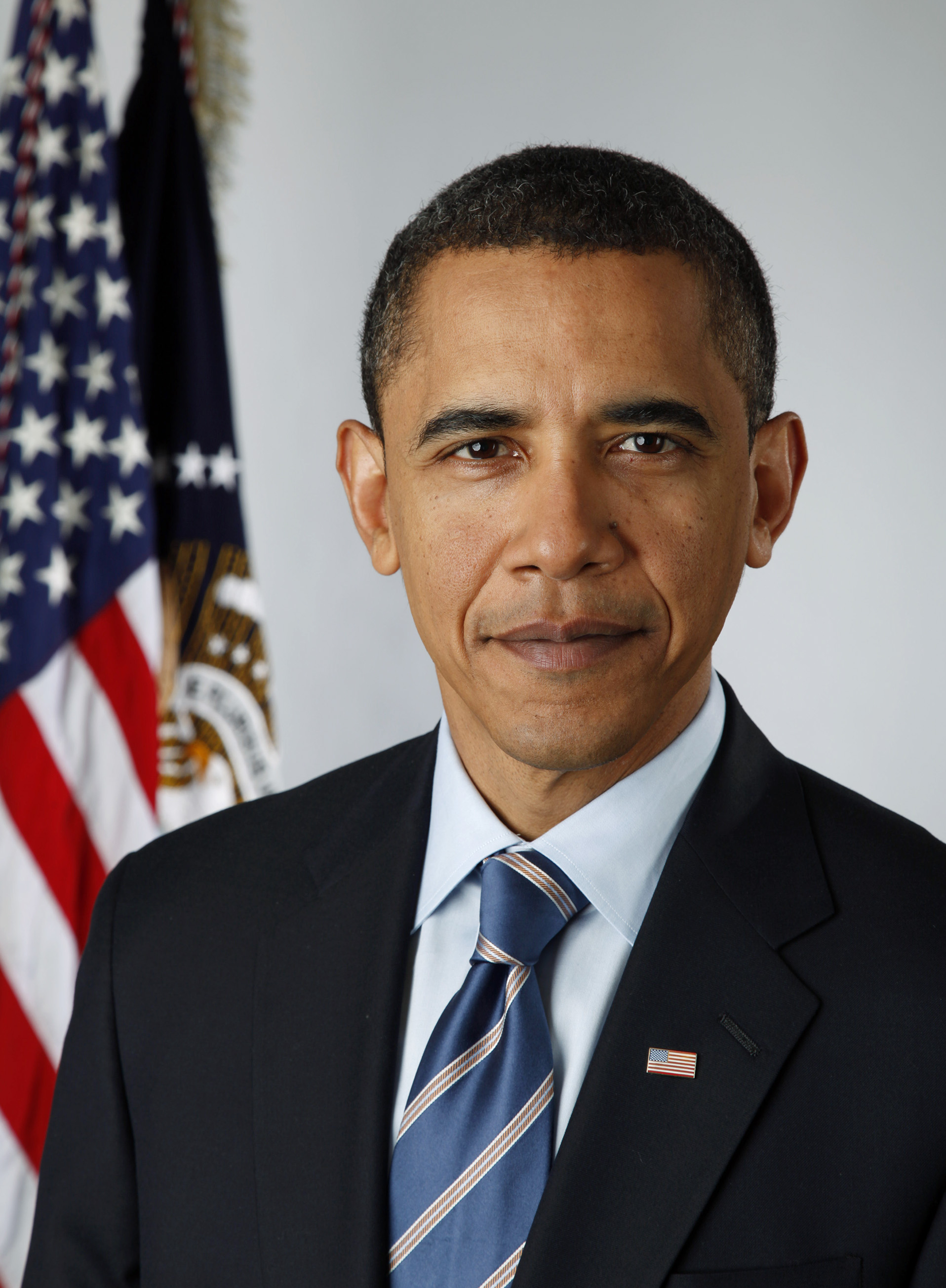
Official portrait
And a 67% Yay because 67% of registered Ohioans voted!  That's before provisional ballots and overseas ballots are counted.  My ballot has not been counted, so I am not part of that 67% - yet!  Ohio allows absentee voters ten extra days past the election to get their ballots in so long as it's postmarked by the day of hte election.  I mailed mine via the US Embassy in London on 19 October.  It still hasn't tracked as "received" yet, so I'm still hoping it does arrive by 16 November so it can join the big pile of counted ballots.  I'm a little annoyed that it hasn't arrived yet and kind of wish I had just mailed it with the USPS but my postage was actually covered so long as it was mailed at the Embassy so I took the "cheap" way of mailing.  We'll see what happens.

I remember back when I was growing up and sometimes we were excited for 45-55% turnout.  67% in a downward economy when people are generally feeling gloomy - that's impressive. And important because democracy only functions when people participate.  My friends in Azerbaijan would love that opportunity: to participate; to count; to vote.  They cannot.  Well, technically they can but it doesn't really matter. Not when the system is so corrupt that someone sits in the open filling out ballots.  In 2009, my friends in Iran mourned the deaths of their fellow citizens, some were arrested or went into hiding, because they demanded their votes count. Instead, Ahmadinejad somehow won more votes in some areas than were counted. And a few weeks ago, I teared up as I read the status reports from friends in Georgia (the country, not the state) excitedly report the first democratic transition their country has had in a century.

Are US elections perfect? Absolutely not. There are moments we should be embarrassed by that get my patented Boo: voting machines that don't select the right candidate, ridiculously long lines that discourage voting, people being told the wrong information about where to vote, people who were told wrong information about when to vote, too many provisional ballots, apparent attempts at voter intimidation, and an asshat Secretary of State for Ohio who tried pretty much everything to discourage voting (great for the Vote Protector-in-Chief). The long list of voting irregularities need to be cleaned up, so if True the Vote and others are serious about protecting our elections, they should start by focusing on the problems that do exist, rather than the ones that don't.

But still... our votes are counted, at least most of the time. And once again, we will have a peaceful transition (or in this case, non-transition) of power. Just as we have every four years since 1780 except for 1860 and 1864, when South Carolina threw a hissy fit and seceded from the Union a little over a month after Lincoln won and then we were embroiled in the civil war that started.

Our votes count and the exciting thing is that younger people seem to finally be fully understanding that.  An estimated 19% of voter turn-out belonged to the 18-25 year olds; 16% to the 65+ crowd.  That's a massive difference from when I was first getting the right to vote. It is exciting. It is democratic. And it feels good.

And the women! Yay women! Not only did women rock the vote but they also rocked the vote-getting.  The US will now have more women serving in the Senate than ever before.  Of course, the Boo of it all is that we still only have 19 female Senators, so less than 1/5 of our more powerful and "stable" part of Congress. But the women we did elect: amazing!  Claire McCaskill would get massive yays! for no other reason than blowing off Legitimate Rapes Akin, but I also really like her as a person.  Wisconsin elected Tammy Baldwin, its first female Senator and the first openly gay Senate candidate (Barney Frank was openly gay but only admitted it after being elected). And Massachusetts finally caught up to its liberal rep when it chose consumer rights extraordinaire Elizabeth Warren as its first female Senator!  It's not just the Senate, though. Illinois elected super bad-ass, double-amputee Tammy Duckworth, the first female combat veteran to serve in the Senate. She's not the only disabled member of Congress, but according to the font of all knowledge she's the only disabled female representative.  And New Hampshire is now touting women in all its highest offices: Governor, both Congressional representatives and both Senators!

Now, I do have to ask WTF was up with the BBC last night?  It was like they couldn't find a Republican to save their life.  They had some random guy with a British accent on talking about American patriotism and predicting Romney would win two consecutive terms with more than 300 electoral votes even after Pennsylvania, Michigan, and Wisconsin were called and when it looked like Ohio was going to Obama too.  It was weird and embarrassing and annoying to have to listen to someone who clearly can't call an election half as well as me get paid to do nothing but grandstand for the GOP.  And yet there wasn't a single Democratic operative while I was watching (which was for a long time!).  Every time that man talked I felt like someone was driving nails into my brain because that's the only explanation for the insanity I was hearing - and the only way I would end up losing the brain cells I felt myself losing every time they asked him a question.

I have two final boos and three final yays:

(1) Boo to the people of Paulding County, Ohio, for not realizing just how awesome my uncle Mike is.  He once told me he didn't understand half of what I said and disagreed with me on the other half, but was so proud of me for doing what I do.  And I have to say that I'm so proud of him for standing for office. He is a fantastic human being and I'm proud to call him family. Paulding County could have been proud to have him as a county councilman.  I love Paulding County, so I won't be booing them for very long. They are family for me out there, and so much of who I am is owed to my growing up in my great-grandma Kate's shadows. But, still, today I was sad to see they missed excellence when it was in front of them.

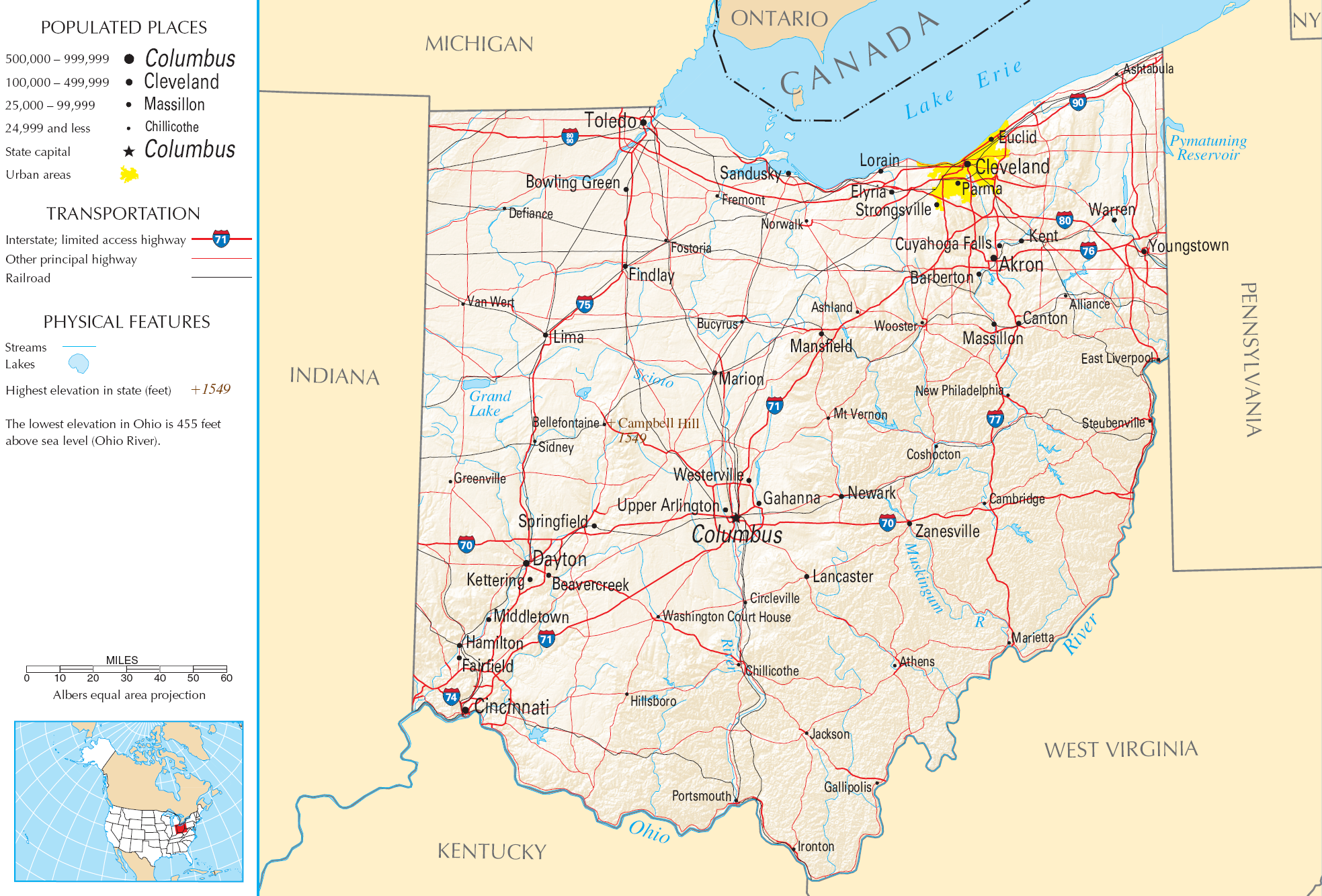
Ohio - from a federal government atlas via wikipedia
(2) Sadly, Ohio also did not vote for its statewide issue 2, which would have reformed how our US Congressional districts are drawn.  The amendment was long, the language complicated, and the idea not particularly the best, but we need to do something about the way our districts are drafted and accepted. Ohio voted for President Obama and Senator Sherrod Brown, but only 3 of our 14 Congressional seats will be Democrats.  That's not because we actually flip-flop that much. It's because our seats aren't drawn in a competitive way so it favors whichever party holds three key positions in the state at the turn of a decade.  This time it was the Republicans.  That's a pathetic way to draw Congressional districts and it's a shame on the Ohio legislature for allowing politics to get so out of hand that they view "similarities in needs" based on party affiliation and not the general makeup of the populations. Again, I don't think this was perfect but it would be nice to try something other than what we have, so I hope we get another option in 2 years. They get my strongest, most vehement boo today.

And three final yays: (1) My hometown school system may be squeaking out a levy win.  Ohio schools have been (state) unconstitutionally funded since something like 1994.  It's an asinine system that makes the schools go back and ask for property taxes pretty much every 2 or 3 years because the taxes they do get don't actually increase with cost of living or average wages or anything.  They just stay the same.  So they get outdated really quickly and they have to constantly ask voters for money just so they can pay their bills.  And instead of fixing the system, everyone just twiddles their thumbs and goes, "Yup... very difficult thing there, isn't it?  Complicated.  Very, very complicated."  So our public schools are regularly harmed while the state continually strips them of income to fund "charter schools," meaning private businesses, who largely have a worst track record than the public schools.  Why?  Because no one has the political will to do something that might mean they aren't elected to their next sought-after office (and since Ohio also has term limits on state offices, they're all always searching for their next office).

(2) That said, my friend Jim Butler was re-elected to the Ohio House of Representatives (the state legislature) and I'm happy even if he is a Republic.  I disagree with him on most things, but I love the kid to death.  And by kid, I obviously mean someone who is older than me (I think; I just checked his official bio and while it doesn't list a DOB, he completed the Navy and a Master's degree before I met him when I was just a wee little 24-year-old).  So yay Jim!  I can't wait for you to implement my school funding plans (that's a joke because he never really does what I tell him to...)

Sen. Brown's official potrait
(3) Final yay: Sherrod Brown. I heart him.  Now imagine that heart in the shape of the State of Ohio and you almost get to know how much I love him. I think he is an amazing and tireless public servant and exactly the person I'd like my parents to go to if I ever get kidnapped while doing aid work abroad (a serious consideration that anyone in aid or development work needs to make before they go in the field).

One more mini-yay: next time I go home there won't be any political ads on TV!  My family can have their lives and TV time back! And that's something every swing state is thankful for today.

[Edit: I didn't even realize Bill O'Neill, a friend of my brother's, won a seat on the Ohio Supreme Court!  Best part about this? O'Neill took absolutely no money in this election.  I doubt anyone else will attempt to replicate this, but I'm pleased he won!]